
Understanding what we want from a trip
I watched the woman in front of me crumple. The cigarette between her fingers continued to ash. The night was cool, a reprieve from Thailand’s intense spring heat characteristic. Beside me was a German girl, six months deep into a year-long trip. I was about four months into my own equally long journey. The woman across from us fought hard against the tears. Her lips curled around the cigarette, seeking strength. Her eyes betrayed her as she continued in an exasperated tone: “I’ve been here three days, and I’m over it.” She had arrived in Chiang Mai as the start of her six-month Southeast Asian tour.
She introduced herself then, abruptly, as if all the vulnerability was a precursor to her name: Lisa. Before she got to a name, all I knew about Lisa was how deeply ashamed she was for not enjoying herself in the first few days of her trip. Before she mentioned her nationality, I knew Lisa had worked for the last year to quit her job for the dream of seeing Thailand. By the time a second cigarette was lit, Lisa from the UK was hurriedly apologizing for burdening us with her discontent. I couldn’t accept the apology—not in good faith and not with the knowledge that I had been in Lisa’s shoes just a month earlier. Lisa, who only wanted to see it all and live the romanticized gap-year vision, was not enjoying herself. Not in the slightest. And I, for one, could relate.
If I had a penny for every time I cried in a public place in the last three years, I’d have too many pennies. The rooftop of a hostel, tears streaming down my face? Check. Out on the sidewalk,puffy eyes? Check. A bus terminal in the wee hours of the morning, snot clogging my nose? Check. A month before I could sympathize with Lisa, I was leaning against a fire hydrant in Malaysia. It was late evening, and I had arrived that morning on a night bus. The sky was mottled and heavy with clouds. The threat of thunder loomed in the distance, and the humidity of a tropical storm mixed with my tears. I wept as onlookers avoided my eyes.
Lisa had her hair pulled back in a slick ponytail. She fit in well with the backpacker look of the time—flowy linen pants in a shade of blue. My own matching pair was green. Birkenstocks adorned her feet and the German girl’s as well. In fact, if you were backpacking in Southeast Asia and weren’t wearing Birkenstocks, you were wearing Tevas, like me. Our name-brand backpacks and matching microfiber towels united the hordes of tourists that flocked to the sunny, cheap havens of Southeast Asia. We all looked pretty similar, followed similar routes, and seemed only to differentiate in the varying degrees of satisfaction with our trips.
Lisa was less than a week in and unhappy. She explained the isolation, the lack of access to understanding the local culture, and the overwhelming options to do for the sake of doing. The German girl was more satisfied, having translated her hobbies from home into a new location. She would go rock climbing every day and cafe-hop in the afternoons. At that point, I could be placed somewhere in between. I found myself oscillating daily between the horrifying fear that I was missing out and the satisfaction of doing what I wanted.
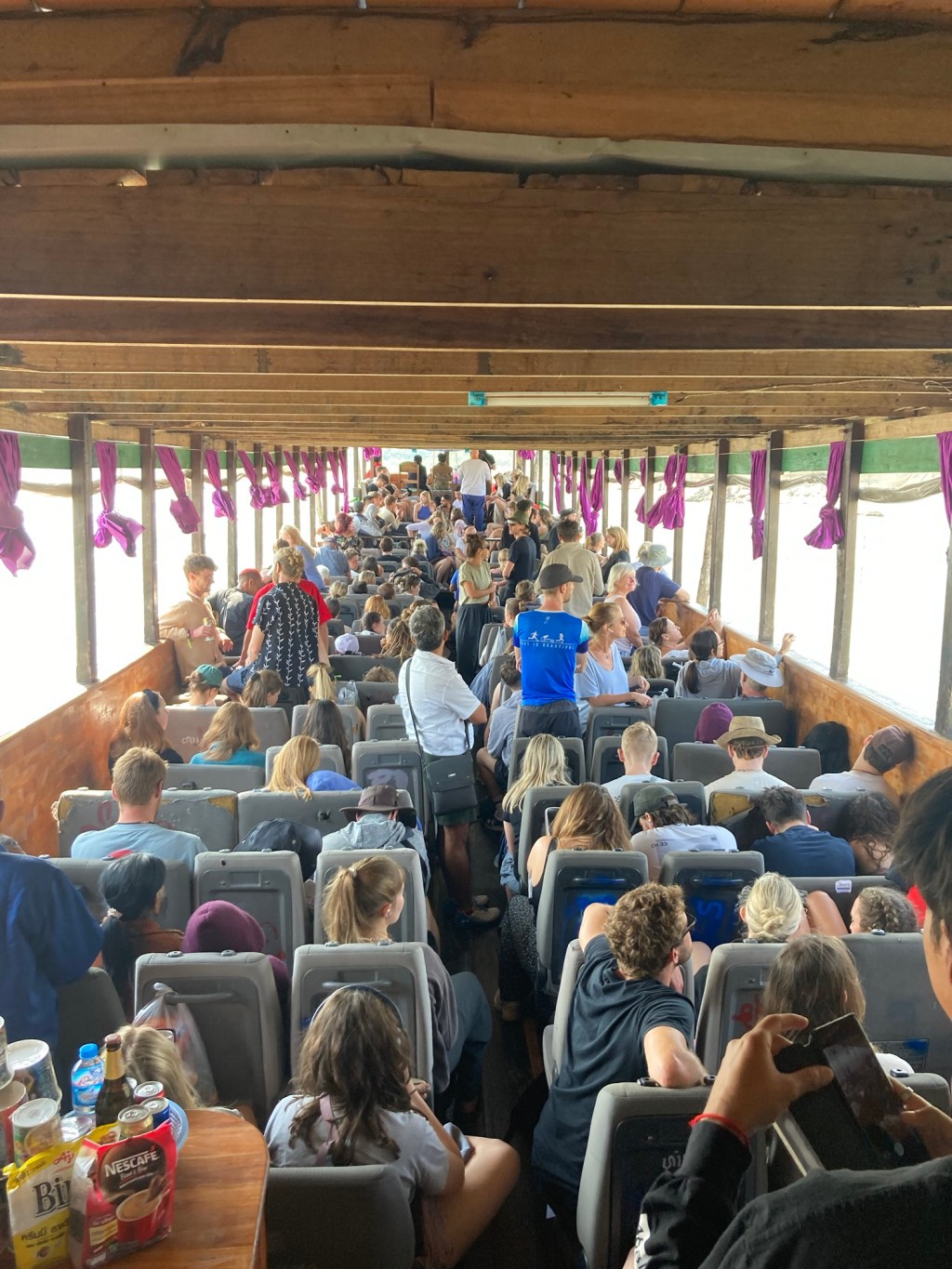
A month before, I was crying not because I was lonely or afraid but because I felt so deeply ashamed. I was in Borneo, a mystical land of jungle and wildlife. And the truth was, I was miserable. I wasn’t having fun, and when I looked around, all the people in their matching outfits and travel gear seemed enchanted. They were doing all the cool, exciting things, having the time of their lives. And there I was, paralyzed by choice and, worse, out of touch with any real concept of Malaysian culture. I was crisscrossing the region on long buses, filling my time with the top 10 things to do in Borneo. Nighbuses, dingy hostels and sidewalk meals left me depleted, exhausted and full of shame. I felt ashamed of the privilege I was wasting. Deeper than that, I felt it was a champagne problem to complain about not having fun. Who was I to complain about being spoiled for choice? Furthermore, who was I to complain about having the dream trip so many others longed for?
Lisa’s experience wasn’t identical to mine, but the parallels existed in the isolation and overwhelming emotions. However, our strongest overlap was the guilt we felt for having imperfect travel experiences. In our attempts to achieve the idealized dream of backpacking, we both found ourselves falling short and guilt-ridden as a result. In trying to adhere to all the must-do activities of each place, to never feel alone despite solo traveling, and to enjoy every single moment, we inevitably failed to keep up.
Before meeting Lisa but after crying on the fire hydrant, I broke down about a dozen more times. And since meeting Lisa almost two years ago, I have cried multiple times more. There seems to be no end to the ebb and flow of deeply impassioned travel and lackluster adventures that leave me drained. It does seem easier now than it did before. I can only attribute this to the realization that traveling and life are not mutually exclusive. Being in a dorm room on the other side of the world does not exempt you from being human. Feeling unsatisfied or overjoyed are not solely dependent on how many night buses you’ve taken that week. In fact, when we romanticize an experience, we do ourselves a disservice. We ask not to feel it but simply to perform it.
Hiking a mountain in Malaysia, once romanticized, is no longer the experience of gasping for air at high altitude and the relief of reaching the top. It becomes simply the tagline: “I’ve hiked that mountain.” When we strip the emotion and turn experiences into checklists, we install a pressure that removes us from the moment. Instead of being selective, we simply check a list. We miss out on roadside chats with strangers and getting lost on the way to a market. What a disservice to ourselves and the experiences we endeavor to have. We reduce a country to its Lonely Planet list and, without caution, can leave without any true understanding of its people and culture. Of course, that isn’t most people’s intention, but it is a side effect of the peer pressure to do it all. It is unfair to spread ourselves thin and, worse, to inadvertently learn nothing of the place we visit.
Lisa, I hope, found her rhythm—or at least gave herself a little bit of grace. Because truly, that is all we can do, in life or in travel. To give ourselves the grace to not always enjoy every moment, without penalization. To accept that we can’t do it all, and to instead focus on what we actually want. Maybe, in that, we can find a bit more peace.
 GO FURTHER TRAVELS
Leave a comment