
What do we gain from travel?
I have visited 50 countries, and I am in my 20s. Forty-five of those countries are ones I have travelled to in the past 5 years. Does that statement make me proud? Does it spark any sense of wonder in you? Do you leap right away to an answer—trust fund kid, influencer, daddy’s money, whirlwind tours? And does any of it really matter at all?
I have had a bag on my back since I was 5 and my parents carted me around Central America. We journeyed across the thin strip connecting North and South America. This was 2005 and my dad was going off a Lonely Planet Guide and a prayer. My mom spent the weeks in advance drilling us on Spanish phrases from a pocket guide. How they arranged hostels and navigated border crossings without phones is, to me—a child of the tech generation—unfathomable.

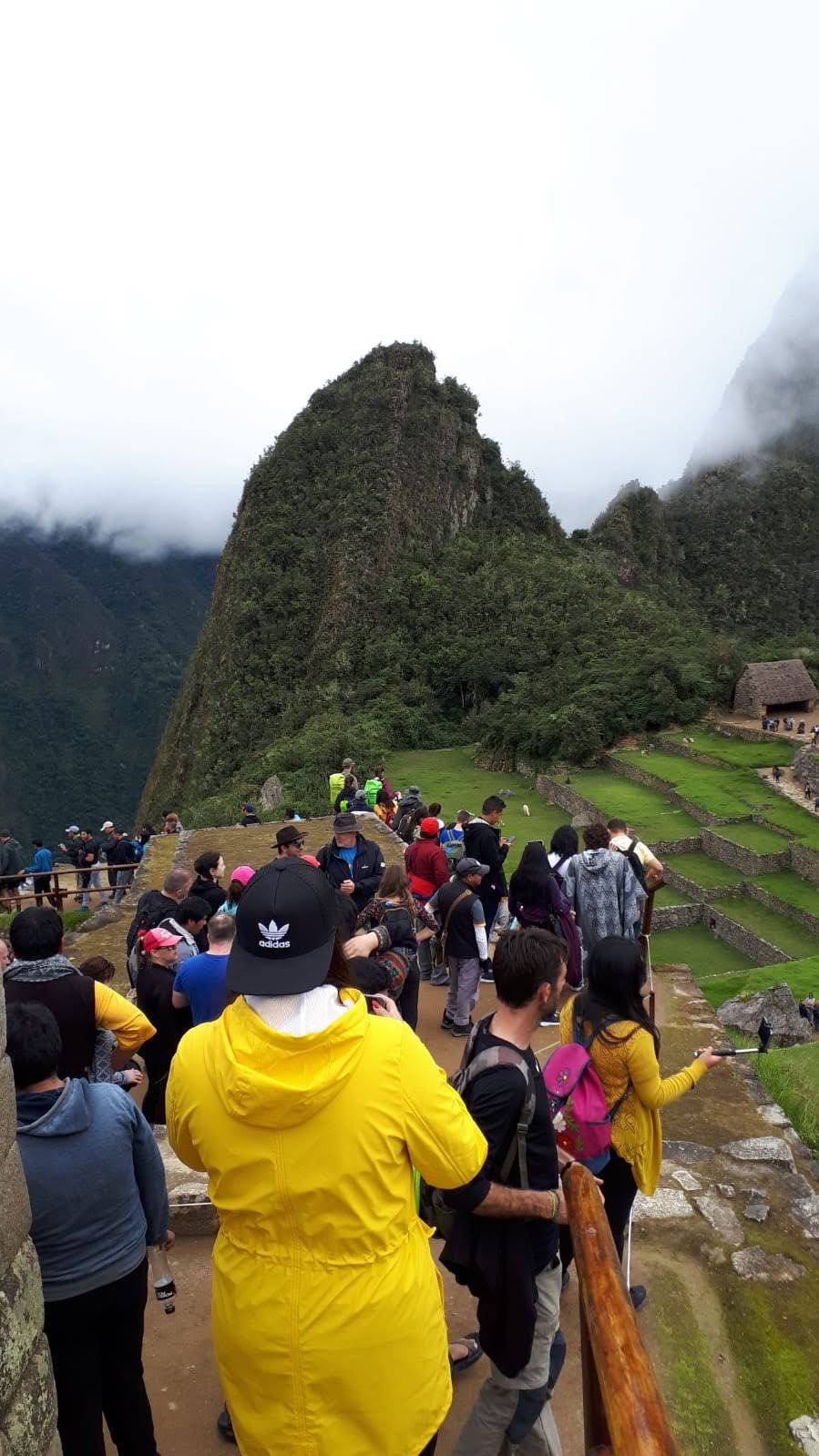
The first trip I took on my own was to Peru. I had registered for a language course, entirely organized online. Before I boarded my flight I had nearly every detail mapped out. I navigated the ancient sites of Cusco, taking old Inca paths with confidence only a GPS can bring. When I finally stood overlooking the great site of Machu Picchu, the gem of the ancient world, I was unimpressed.
Deeply and profoundly unimpressed. A feeling that would be echoed multiple times over the next five years. It occurred as I stood in front of Angkor Wat, the Sagrada Familia, and even the Great Pyramids. I have had the opportunity to see these fantastic relics that connect our past to our present. Each time I have been left with a devastating underwhelm.
I’ve spent the majority of the last three years travelling across dozens of cities and countless sites. It has been a unique privilege to share tea uncomfortably with families I’ll never see again, or to misdirect tuk-tuk drivers and navigate back to hotels in languages I don’t understand. These moments on the periphery of the big sites have arguably impacted me more.
I see in myself this hyper-dependence on technology. I fear even getting a few streets lost in an unknown place. To the point I’ll even procrastinate booking hotels because filtering through the reviews feels like scaling a mountain. My dependence simultaneously drains me as it helps me. Guides to towns or hikes that others have published inform my choices. Reddit posts of people who have figured it out before me are invaluable when it seems that no hostel owner or other traveler has answers.

I recognize that the tool which gives me such support is directly tied to the growing dissatisfaction I have with the “great sites.” These must-see places have fallen short for me, without fail. Their online publicity feels in many ways more tangible than when I face them in person. It is as if their digital proximity creates this illusion of comfort, while the random unplanned encounters—the ones which would disrupt or challenge me—are necessarily out of reach. They can’t be published.
Before I went to Machu Picchu I researched it obsessively. I had seen hundreds of posts and vlogs on it. I had absorbed the easily discoverable experience of Machu Picchu before my feet had even touched the ground. So when I stood there in the early morning mist with hundreds of other people, I felt…comfortable. I took my place obligingly at the same outpost where others before me had snapped their shots. I could have found that lookout in the dark, having rehearsed and memorized the view from all the media I’d consumed. Machu Picchu is still a remarkable feat, but the experience didn’t match any expectation; it was simply a cog in the greater travel machine.
Travel, it seems, has become a sort of currency in our culture. We all want it and the status that comes with it. Technology and social media have only deepened our capacity for envy. It also shrinks the distance between a person and a place. Thanks to a 20-second TikTok on Paris, you know exactly where to go when you arrive. I’d argue that it also compels you to replicate the experience of a person before you. In a way that is unique to this generation of multifaceted technology, our experiences in travel become echoes of the people who got there first. So much so that, when we get there, we are so far removed from a place that has come to digitally feel so close.

At Angkor Wat I dragged myself out of bed for sunrise. The iconic image of the sun lighting up the ancient temple from behind had been seared into my mind. I arrived at the muggy viewpoint amidst a thousand other people. We watched as the fog hid the sun for two hours. Reluctantly, the crowd thinned as it became clear no “Instagrammable” sunrise would reveal itself. Angkor Wat was no less magnificent because of the haze. The expectation I placed on it had diminished the experience. Later, as I wove through crumbling ruins and tripped over giant roots, I finally felt a sense of wonder—a connection and an experience that was mine first, rather than an echo of someone else’s.
We can’t avoid technology and we can’t avoid rapid globalization. Travel has always aimed for deeper understanding and connection. It’s worth taking a look at our overconsumption—our deep craving—not just for travel but for travel content. Can we ask ourselves why we go somewhere? Do we seek replicable results, or are we willing to challenge and reshape our perceptions? For me, travel is about connections. I seek out places I know little of and then I scroll until I find how to get there, what I need, and what I should see. In short, I make use of the tools that technology provides. Once I arrive, I try to engage as much as possible. I stay a bit longer and skip some sights. I work hard to make that experience mine. Sometimes it is; sometimes it isn’t.
Sometimes it truly is a replication of what others before me have done—and I have found enjoyment in that too, the same way that Machu Picchu was underwhelming but not boring. Witnessing something through the eyes of the masses doesn’t make it less remarkable; it simply makes it less impactful. That is the key: in every country there are vibrant, remarkable, and impactful moments. In my travels there are always remarkable moments, but only when I have opened myself up have I encountered things that truly left an impact.
It may sound impressive to have visited 50 countries. It may sound privileged to say that big sites are underwhelming—or it may not matter to you at all. But what has become clearer to me with every new community I visit is this: our undeniable connection is not to the places themselves but to the people. What we risk with overconsuming travel content and focusing hard on big sights is missing out on the genuine connection available to us—the deeper perception that rewards the discomfort of living.
 GO FURTHER TRAVELS
Leave a comment